Nationwide Heavy Haul and Vehicle Transport

Boat Shipping South Carolina, SC
  • Home
  • Blog
  • How Much Does Motorcycle Shipping Cost?

How Much Does Motorcycle Shipping Cost?

Boat Shipping South Carolina, SC
How Much Does Motorcycle Shipping Cost?

Motorcycle shipping cost usually ranges from $300 to $1,000 for domestic transport in 2026. Short open-trailer shipments can cost $200 to $350. Enclosed cross-country transport can reach $1,500 when the route exceeds 2,000 miles.

The national average is about $500. However, oversized touring bikes can cost more because they require extra trailer space. Urgent pickup can also raise the total.

A low initial estimate can change after a carrier reviews the motorcycle. Comparing the same transport method across several written offers helps you avoid an unexpected increase before pickup.

What Is the Average Motorcycle Shipping Cost?

Most domestic shipments cost between $300 and $1,000 in 2026. The average customer pays about $500. Open transport stays near the lower end while enclosed service costs more. Long routes offer a lower mileage rate even though the total price increases.

Ship reports these current national ranges:

Shipping distance Open transport Enclosed transport
Under 500 miles $200 to $350 $250 to $600
500 to 1,000 miles $300 to $500 $450 to $850
1,000 to 2,000 miles $450 to $750 $600 to $1,000
More than 2,000 miles $600 to $1,000 $750 to $1,500

The table applies to common motorcycles with standard pickup timing. A larger touring bike can fall near the upper end. A lightweight dirt bike often costs less when it fits standard carrier equipment.

Published interstate motorcycle transport prices differ because each source uses different routes. One 2026 guide places the broad national range between $300 and $1,300. Another reports an average of about $500.

The useful planning number is not one national average. Your estimate should reflect the route distance and trailer type. It should also include the motorcycle’s dimensions.

How Does Distance Change the Price?

Distance raises the total payment while the price per mile usually falls. A short shipment has a high mileage rate because loading work remains similar. Long-distance transport spreads dispatch and handling costs across more highway miles. Cross-country open service can cost $600 to $1,000.

A shipment under 500 miles may cost more than $1 per mile. The total often remains below $500 because the route is short.

A 1,500-mile shipment may fall below $1 per mile. Yet the final amount will be higher because the truck travels much farther.

One 2026 analysis reports an average rate near $0.60 per mile. That benchmark applies to truck transport across a mix of shipment distances.

Use the following planning guide:

Distance Common planning range Typical transit period
Under 500 miles $200 to $600 1 to 3 days
500 to 1,000 miles $300 to $850 2 to 5 days
1,000 to 2,000 miles $450 to $1,000 3 to 8 days
More than 2,000 miles $600 to $1,500 5 to 10 days

Transit periods begin after pickup. Carrier assignment can add several days before the motorcycle enters the trailer.

The counterintuitive point is that a longer trip can provide better mileage value. A short route may still have the lower total price.

Which Shipping Method Costs the Least?

Open transport usually costs the least because one trailer can carry several motorcycles. Enclosed transport blocks weather exposure and normal road debris. Crated freight provides added structure but requires more preparation. The correct choice depends on the motorcycle’s value and design.

Open Motorcycle Transport

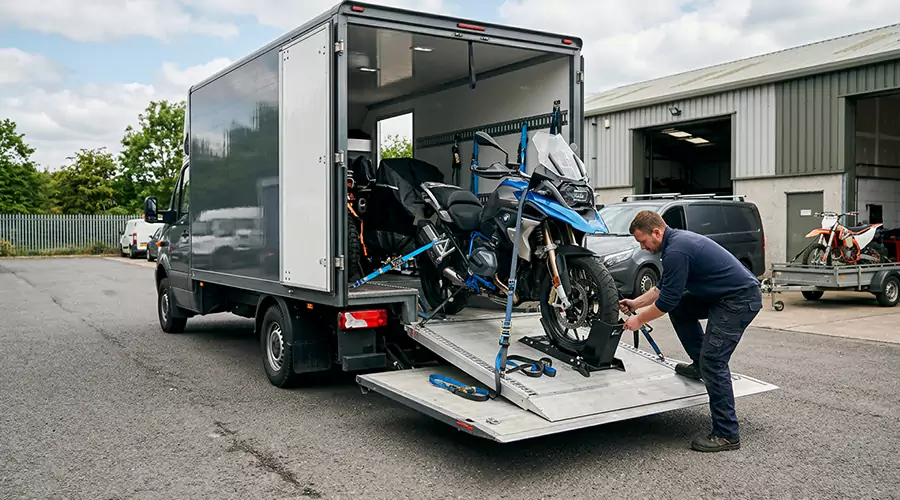
Open transport places the bike on a trailer without complete side walls. Professional carriers use wheel chocks and transport straps to limit movement.

This method often costs $200 to $350 for routes under 500 miles. Cross-country open shipping usually falls between $600 and $1,000.

Open transport suits standard motorcycles that do not need full exterior coverage. Rain exposure and road dust remain possible during the trip.

Enclosed Motorcycle Transport

Enclosed service carries the motorcycle inside a covered trailer. It provides better protection from weather and highway debris.

The price often ranges from $250 to $600 below 500 miles. Cross-country enclosed transport can cost $750 to $1,500.

Enclosed shipping makes sense for a classic motorcycle or custom paint. A rare bike can justify the higher price when cosmetic repair would be expensive.

Crated Freight

Crated transport secures the motorcycle inside a rigid shipping frame. Freight providers may require the fuel tank to be drained. Battery removal can also be required.

Crated cross-country shipping can cost $800 to $2,400 depending on the crate and service level.

This method requires more preparation than standard trailer transport. It can work well for international freight or motorcycles that need rigid protection.

What Factors Change the Final Quote?

The final quote changes with the motorcycle’s size and operating condition. Trailer type creates another major difference. Seasonal demand can restrict carrier space. A narrow pickup window also raises the chance of a higher offer because fewer trucks can accept the shipment.

Motorcycle Size and Weight

A large touring bike uses more trailer floor space than a small scooter. Extended forks can also affect placement.

Oversized handlebars may require additional clearance. Sidecars create a wider footprint that can need special equipment.

Accurate dimensions help the dispatcher reserve enough room. A quote based on a standard motorcycle may change when the actual bike is much larger.

Operating Condition

A running motorcycle can usually be moved into position with normal loading equipment. An inoperable bike may require a winch.

Tell the carrier when the transmission does not shift into neutral. Locked wheels can require different loading equipment.

An undisclosed condition can create a pickup delay. The carrier may also increase the price when additional labor becomes necessary.

Seasonal Demand

Motorcycle transport demand can increase during riding season. Carrier capacity also changes around major events.

Fuel prices can affect current vehicle shipping rates. Trailer availability creates another change between otherwise similar estimates.

Booking early gives the shipment more opportunities to fit an existing route.

Urgent Pickup

A wide pickup window lets the dispatcher choose from more carriers. Urgent shipping narrows the available pool.

Fast motorcycle shipping can cost more because the carrier must reserve space within a shorter period.

Choose expedited pickup only when the schedule has a firm deadline.

How Can You Estimate the Price Yourself?

You can create a useful estimate by matching your distance with the current open or enclosed range. Then adjust for motorcycle size. Compare the result with three written offers. This process will not guarantee the final amount but it can expose unrealistic pricing.

Use this five-step test:

  • Find the highway distance between pickup and delivery.
  • Select open or enclosed transport.
  • Match the distance with the cost table.
  • Add more for an oversized motorcycle.
  • Compare three offers with identical details.

A 1,200-mile open shipment would normally fall inside the $450 to $750 range. Enclosed service for the same distance commonly falls between $600 and $1,000.

A motorcycle shipping cost estimator provides a planning figure. The carrier still needs to review the route and motorcycle before confirming the price.

Do not compare an open estimate with a crated freight price. These services use different equipment and preparation methods.

Check the total rather than the booking deposit. The remaining carrier balance should appear in writing.

How Long Does Motorcycle Shipping Take?

Domestic motorcycle transport usually takes one to ten transit days after pickup. Short routes can finish within three days. A cross-country shipment often takes five to ten days. Weather or multiple delivery stops can extend the estimated arrival period.

The full process includes more than driving time:

  • Quote comparison can take one or two days.
  • Carrier assignment can take several days.
  • Pickup includes a condition inspection.
  • Transit depends on route distance.
  • Delivery includes another inspection.

A scheduled pickup day is not always an exact appointment. Commercial carriers manage several vehicles on one route.

The driver may need to adjust arrival times because of traffic. Federal driving limits also affect daily progress.

Keep another authorized person available when your schedule is restricted. That person should understand the condition report and payment terms.

What Warning Signs Should You Check?

A risky quote often sits far below the current market range. Other warning signs include missing federal authority or an unclear payment schedule. The company should state whether it acts as a broker or motor carrier. The arriving truck should match the assigned business.

Check these ten warning signs:

  • No MC number appears: Interstate brokers and carriers should have active federal authority.
  • The business role is unclear: A broker arranges transportation while a carrier operates the truck.
  • The price is much lower than other offers: A low estimate can fail to attract a carrier.
  • The trailer type is missing: Open service cannot be compared with enclosed transport.
  • The motorcycle model is not listed: Incorrect dimensions can change the final charge.
  • A large deposit is required at once: Review the refund terms before paying.
  • The assigned carrier is not identified: Confirm the legal business name before pickup.
  • Insurance details are unavailable: Request the active cargo coverage information.
  • The bill of lading shows another price: Stop the pickup until the amount matches.
  • The truck details do not match: FMCSA recommends verifying the carrier’s phone number and vehicle information.

Claims about the best motorcycle transport companies should not replace federal verification. Search results can include fake profiles created by scammers.

When Should You Contact a Professional Transporter?

Professional guidance is useful when the motorcycle is inoperable or oversized. It also matters when the bike has a sidecar. A transporter can match the shipment with suitable loading equipment. The carrier should explain securement methods and cargo coverage before pickup.

Compare motorcycle transport companies by equipment and federal authority. Customer ratings can provide context but they do not prove legal operating status.

Ask how the motorcycle will remain upright. Professional carriers commonly use a wheel chock with approved straps.

FMCSA rules require commercial cargo to be immobilized or secured. Rolling items must also have restraints that prevent movement.

Contact a specialist when custom bodywork limits strap placement. An inexperienced loader can damage paint by placing straps against finished surfaces.

A motorbike transport service should document the motorcycle at pickup. Review the condition report before signing.

How Can You Lower the Shipping Price?

You can lower the price by booking early and selecting flexible dates. Open transport costs less than enclosed service. Accurate dimensions prevent later adjustments. Removing loose accessories can also reduce loading problems. The lowest safe option should still include proper equipment and active carrier authority.

Use this preparation schedule:

  • Three weeks before pickup: Compare distance-based ranges.
  • Two weeks before pickup: Request matching written estimates.
  • One week before pickup: Check the tires and battery.
  • Two days before pickup: Remove loose accessories.
  • Pickup day: Review the condition report.

Keep the fuel tank no more than one-quarter full unless the carrier provides another instruction. A lighter tank reduces weight and leak risk.

Photograph the motorcycle from several angles. Record existing scratches on the bill of lading.

Remove detachable luggage or electronic mounts. Loose items may not receive the same cargo protection as the motorcycle.

Cheap motorcycle transport should still include professional restraints. A low price does not justify damaged straps or missing wheel support.

How Much Does International Motorcycle Shipping Cost?

International shipping commonly costs more than domestic trailer transport because it may require crating and customs processing. Ocean freight usually costs less than air shipping. The total also depends on the destination country. Port handling and import charges can remain separate from the transport quote.

The international motorcycle shipping cost can begin near domestic crated rates. It can rise well above $2,000 after port fees and customs-related charges.

Some international motorcycle transport companies require complete fuel drainage. Battery removal can also be part of freight preparation.

Ask whether the estimate includes the crate. Confirm whether destination handling is included.

A domestic pricing calculator cannot predict the full international amount. Request an itemized written estimate for each stage.

Conclusion

Motorcycle shipping cost usually falls between $300 and $1,000 for domestic transport in 2026. Open shipping offers the lowest common price while enclosed service provides more protection. Compare matching quotes and verify federal authority before paying. Professional help is useful for oversized or inoperable bikes. This week, measure your motorcycle and calculate a distance-based range before requesting written estimates.

YOU MAY ALSO LIKE

Need Help?

One call solves it all.

Get Instant Quote